
Grotta Sonora Gongs
Raven Sounds is an authorized US dealer for Grotta Sonora — gongs handmade in Italy by Madhava Carrara and Margherita Cioffi, each shaped and tuned by ear, no two alike. Every gong is recorded in our sound room: the recording on each product page is the exact instrument that ships to you. Free US shipping, hassle-free returns. Series guide below the gongs.
-
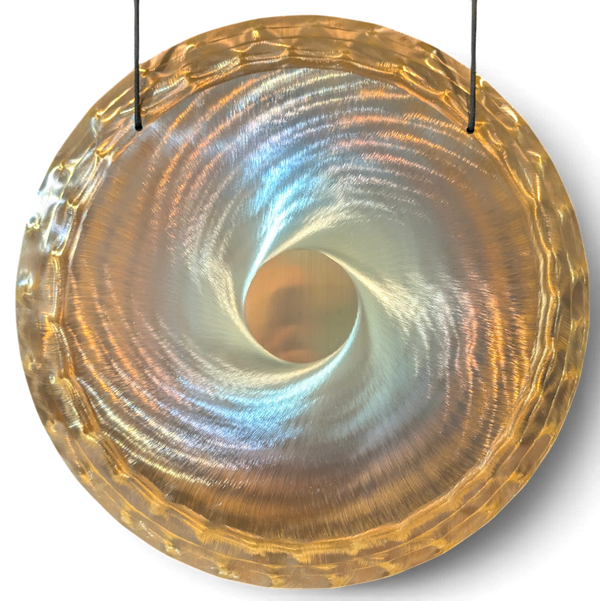 Grotta Sonora
Grotta Sonora 15" Nickel Silver Handheld Gong
12 style & notes · 9 in stock
€642,95 -
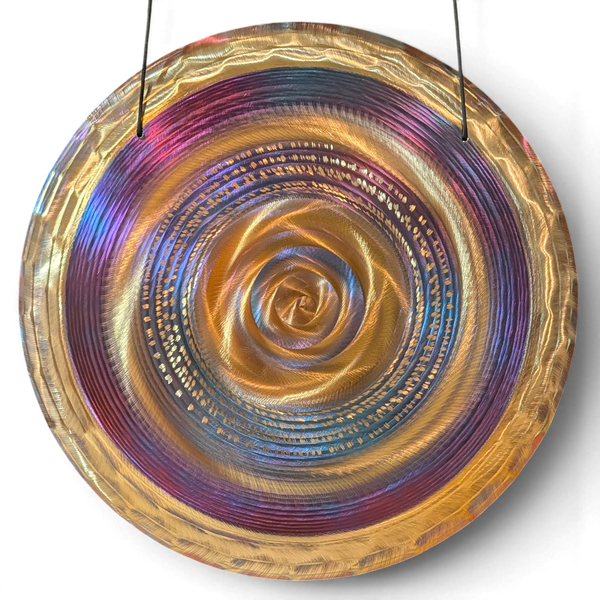 Grotta Sonora
Grotta Sonora 19" Handheld Gong
14 style & notes · 10 in stock
€856,95 -
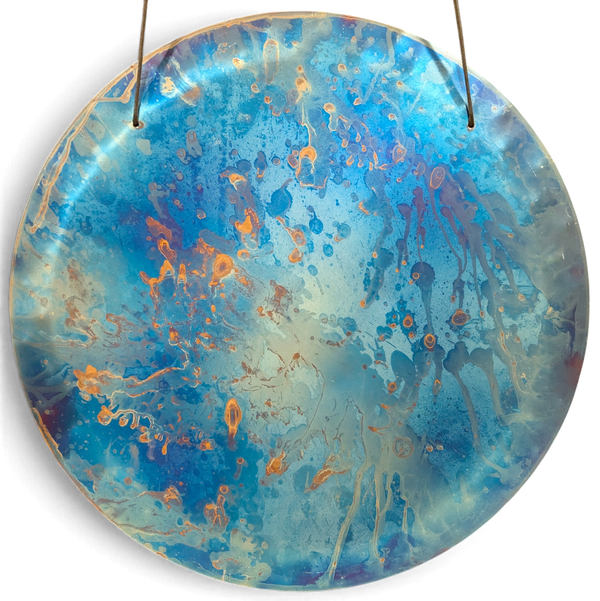 Grotta Sonora
Grotta Sonora 19" Titanium Blue Cosmo Handheld Gong
5 style & notes · 5 in stock
€1.017,95 -
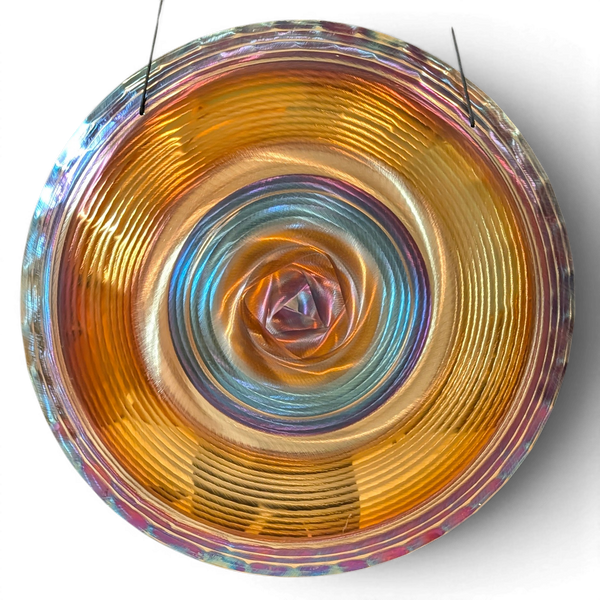 Grotta Sonora
Grotta Sonora 24" King Gong
12 style & notes · 8 in stock
€1.714,95 -
 Grotta Sonora
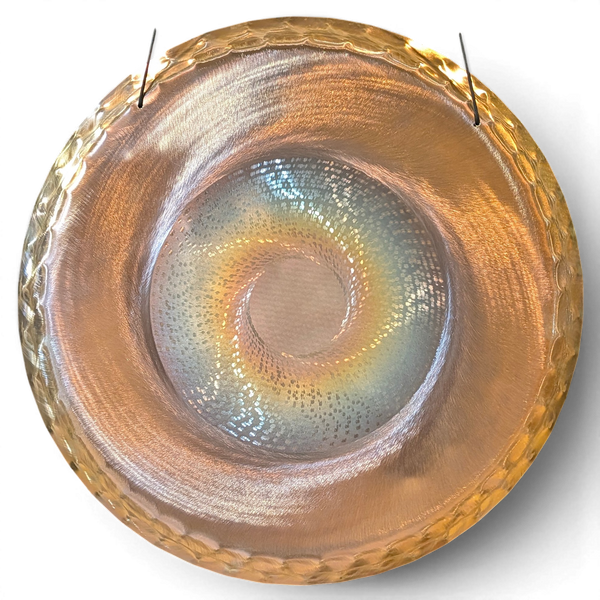
Grotta Sonora 24" Nickel Silver Gong
7 style & notes · 1 in stock
€1.874,95 -
 Grotta Sonora
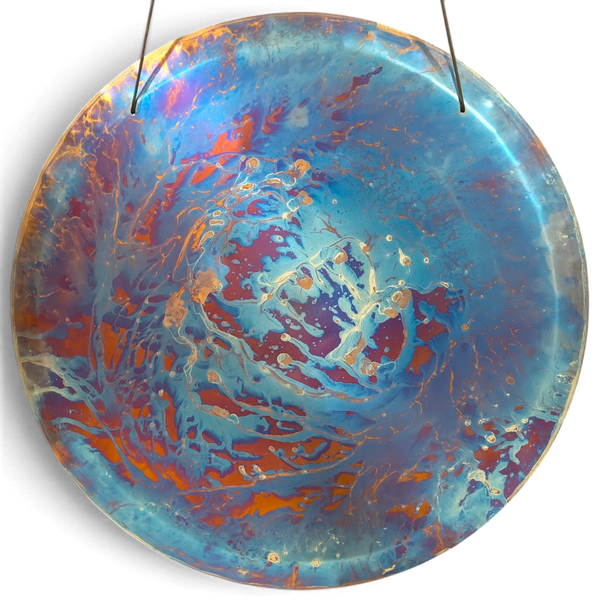
Grotta Sonora 24" Titanium Blue Cosmo Gong
3 style & notes · 3 in stock
€1.874,95 -
 Grotta Sonora
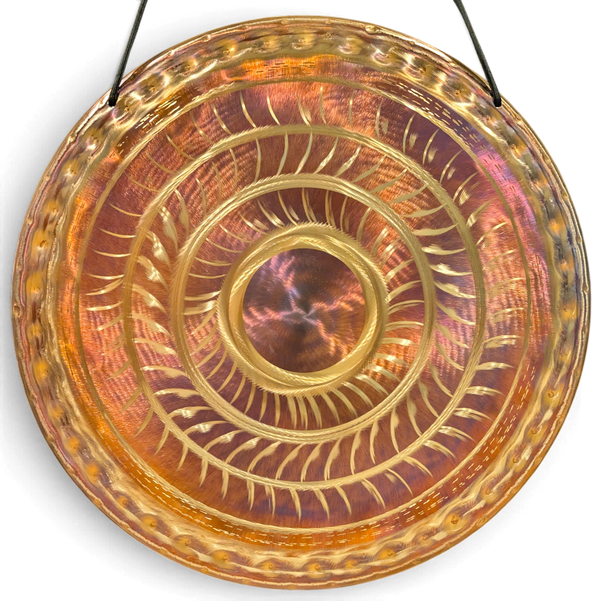
Grotta Sonora 26" Deep Gong
8 style & notes · 4 in stock
€1.874,95 -
 Grotta Sonora
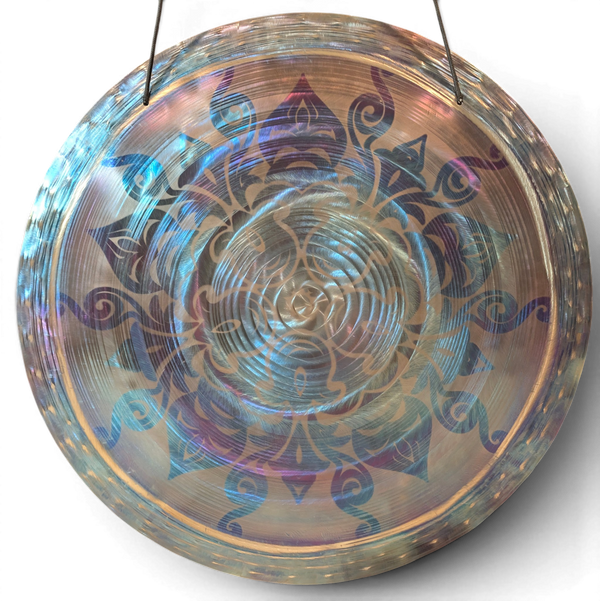
Grotta Sonora 32" King Gong
5 style & notes · 4 in stock
€2.839,95 -
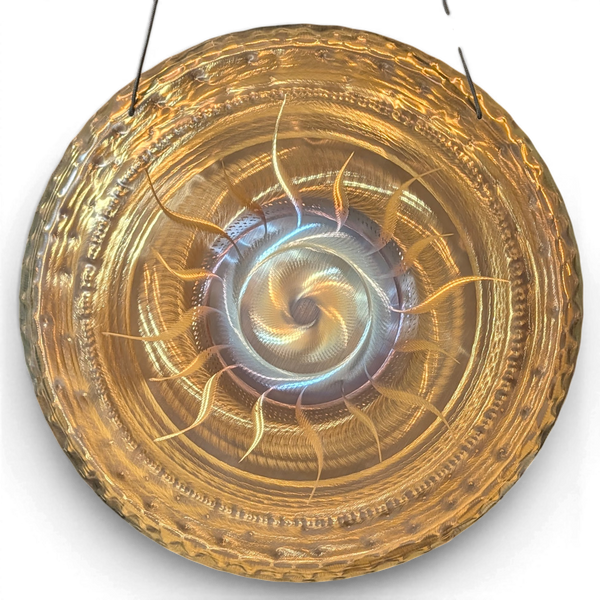 Grotta Sonora
Grotta Sonora 32" Nickel Silver Gong
3 style & notes · 2 in stock
€3.429,95 -
Sold out
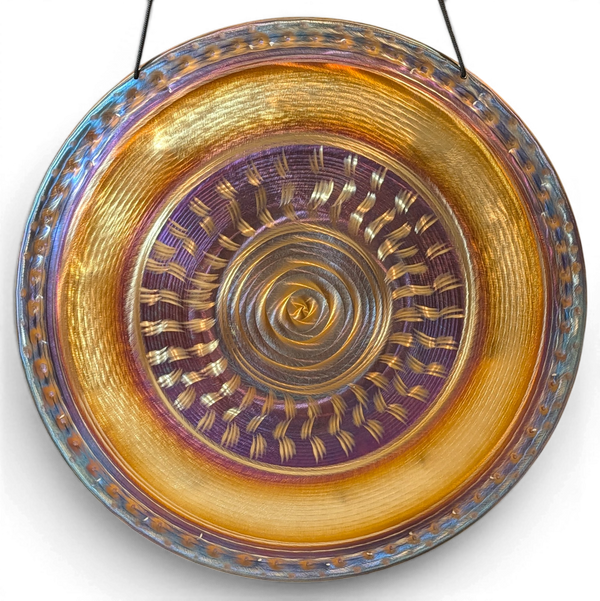 Grotta Sonora
Grotta Sonora 34" Deep Gong
8 style & notes
€3.214,95 -
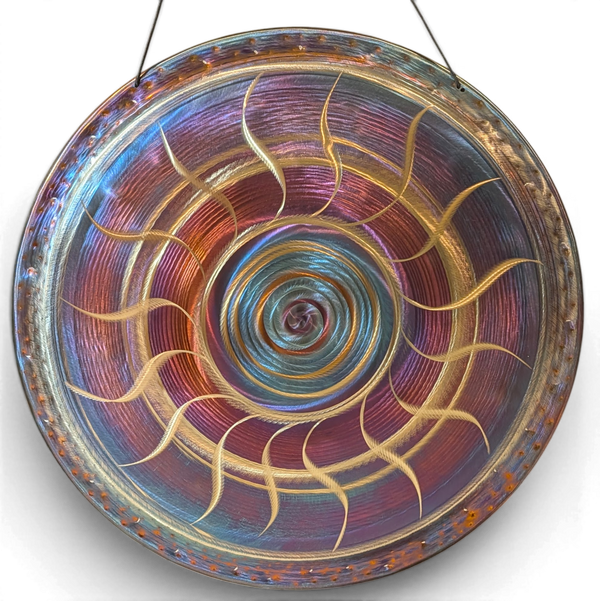 Grotta Sonora
Grotta Sonora 38" Deep Gong
3 style & notes · 2 in stock
€3.750,95
Grotta Sonora: gongs from the sound cave
Grotta Sonora is the workshop of Madhava Carrara and Margherita Cioffi, musicians and sound sculptors based in the Treja Valley north of Rome. The name means “sound cave” in Italian — their first instruments were made in a cave of Etruscan origin near Calcata, the hilltop village where they still work and host sound sessions among their instruments. Every gong is shaped by hand, tuned entirely by ear rather than to a meter, and finished with hand-etched designs and heat colorations. No two are alike, and no catalog number will ever get you the same instrument twice.
Sacred Metal: the alloy behind the sound
Most of the line is forged from the alloy Grotta Sonora calls Sacred Metal — a stainless-steel alloy developed in the workshop as an alternative to the bronze used in most traditional gongs. The character it produces is distinctive: a dense, present center note surrounded by a wide spread of layered overtones that keep developing as the gong sustains. The metal is also practical: it doesn’t corrode with humidity, and it holds its tone through years of professional use.
One property is worth calling out on its own: an unusually strong response to friction mallets. Most gongs are built for strike mallets first. Grotta Sonora gongs respond fully to both — you can build a slow, swelling tone with a rub mallet and move into struck passages on the same instrument. If you play both techniques, the Gong Mallets collection carries strike and friction options.
The series: how to choose
Five series, each with a different structure and voice. Sizes listed are what we stock; every product page carries the exact instrument’s recording.
Deep Gongs — 26", 34", 38"
The folded rim is the defining feature: the edge bends back on itself, creating a deeper sidewall that focuses and strengthens the fundamental. Struck near the center, a Deep Gong produces a pronounced low center note with mid and high partials layered above it, and a long sustain that keeps evolving. Larger diameters go lower — the 38" in particular is a full-body instrument. This is the natural primary gong for stationary sound bath work.
King Gongs — 24", 32"
A flat, rimless face in the Chinese wind gong tradition. Where the Deep Gong focuses, the King opens: struck, it blooms quickly into a broad, shimmering wash that fills a room. Madhava and Margherita tune a harmonic focal point into the center of the face, so the wash keeps a recognizable anchor. Choose a King for a more atmospheric, less directional character — or as the counterpart to a Deep.
Nickel Silver Gongs — 24", 32"
Made from nickel silver, a softer alloy than the stainless steel of the Deep and King series. The result is a more focused, crisp voice: sharper attack, a more defined center, and clarity that carries in larger rooms. Practitioners working big spaces — or who want tonal presence over wash — tend toward this series.
Handheld Gongs — 15", 19"
Built-in handle, made to be played in motion — above or around a client in one-on-one work, or moving through a room. The 19" is Sacred Metal; the 15" is nickel silver. Despite the size these are complex instruments, and many practitioners use one as the mobile complement to a larger floor gong.
Titanium Blue Cosmo — 19" handheld, 24"
The Blue Cosmo series is forged in titanium rather than Sacred Metal, with the deep blue coloration the name suggests — a voice of its own that the recordings on the product pages tell better than adjectives can.
Choosing a first Grotta Sonora gong
For a first stationary gong, go 26" or larger: bigger gongs produce lower fundamentals, more complex overtones, and longer sustain, which is what most sound bath work calls for. The 26" or 34" Deep balances depth against manageability. If you’ll be moving while you play, or already own a floor gong, start with a Handheld instead.
Weights and note ranges by model
Figures below are Grotta Sonora’s own published specifications. Weights are approximate. Note ranges are the typical range Grotta Sonora tunes each size into — they tune by ear, so individual gongs can fall outside it. The exact note of every gong we stock is in its listing, and the recording on each product page is that instrument.
- 15" Nickel Silver Handheld — nickel silver, approx. 4 lbs / 1.9 kg, published range A2–F#3
- 19" Handheld — stainless steel, approx. 6 lbs / 2.7 kg, published range F#2–E3
- 19" Titanium Blue Cosmo Handheld — titanium, approx. 3.5 lbs / 1.6 kg, published range A2–E3
- 24" King — stainless steel, approx. 9.4 lbs / 4.3 kg, no published range yet
- 24" Nickel Silver — nickel silver, approx. 10.6 lbs / 4.8 kg, published range C#2–G2
- 24" Titanium Blue Cosmo — titanium, approx. 5.5 lbs / 2.5 kg, no published range yet
- 26" Deep — stainless steel, approx. 14 lbs / 6.5 kg, published range C#2–F#2
- 32" King — stainless steel, approx. 19 lbs / 8.5 kg, published range B1–F2
- 32" Nickel Silver — nickel silver, approx. 19 lbs / 8.5 kg, published range A1–D2
- 34" Deep — stainless steel, approx. 24 lbs / 10.5 kg, published range A#1–D2
- 38" Deep — stainless steel, approx. 28 lbs / 12.5 kg, published range F#1–C2
Why buy from Raven Sounds
We carry Grotta Sonora through a direct, personal relationship with Madhava and Margherita — the gongs in this collection are selected with the makers, not ordered sight unseen through a distributor.
Every gong is recorded in our sound room before it’s listed: center tone, overtone development, sustain, full decay. Because each instrument is one of a kind, that recording isn’t a sample of the model — it’s the exact gong that ships to you. It’s the most useful buying information we can give you, and we’d rather it do the persuading than the copy.
For a set that works together, the Grotta Sonora harmonized sets page shows combinations assembled around complementary tunings, and we can help build one around instruments you already own. And if you’re weighing this line against traditional bronze, our own Raven Sounds Gongs are handmade Chinese bronze — Chau, Wind, and related styles — a different lineage and a different voice.
Free US shipping, hassle-free returns.
Frequently asked questions
What is Sacred Metal?
The name Grotta Sonora gives the stainless-steel alloy used in the Deep, King, and 19" Handheld gongs. It’s distinct from the bronze of most traditional gongs, doesn’t corrode, and is behind the line’s layered overtone character and friction-mallet response. The Nickel Silver series and the Titanium Blue Cosmo series use different metals.
What’s the difference between a Deep Gong, a King Gong, and a Handheld?
Deep Gongs have a folded rim that focuses a strong fundamental — the stationary sound-bath mainstay. King Gongs are flat and rimless, blooming into a broad wash of sound. Handhelds (15"–19") have a built-in handle for playing in motion.
What size should I choose for a sound bath?
26" and up for group work; the 34" and 38" Deep Gongs are the common professional choices. For personal practice or smaller rooms, a 26" gives real depth without demanding a big space.
Does the gong come with a mallet or stand?
No — Grotta Sonora gongs ship as standalone instruments. Pair one with strike and friction mallets from the Gong Mallets collection; for stand recommendations by size, contact us.
Can I hear the exact gong before buying?
Yes. Every listing carries a sound-room recording of that specific instrument — its center tone, overtone development, and sustain. Listen on headphones; laptop speakers won’t reproduce the low end.
Do you sell used Grotta Sonora gongs?
No — every gong we stock is new from the workshop. Each is one of a kind, and its recording shows exactly the instrument you’d receive.
How do I care for a Grotta Sonora gong?
Grotta Sonora recommends a soft microfiber cloth, with isopropyl alcohol for fingerprints — nothing abrasive on the etched surface. The alloy doesn’t corrode with humidity. Before a session, tap quietly around the face to warm the metal and feel how the instrument responds before playing at volume.