
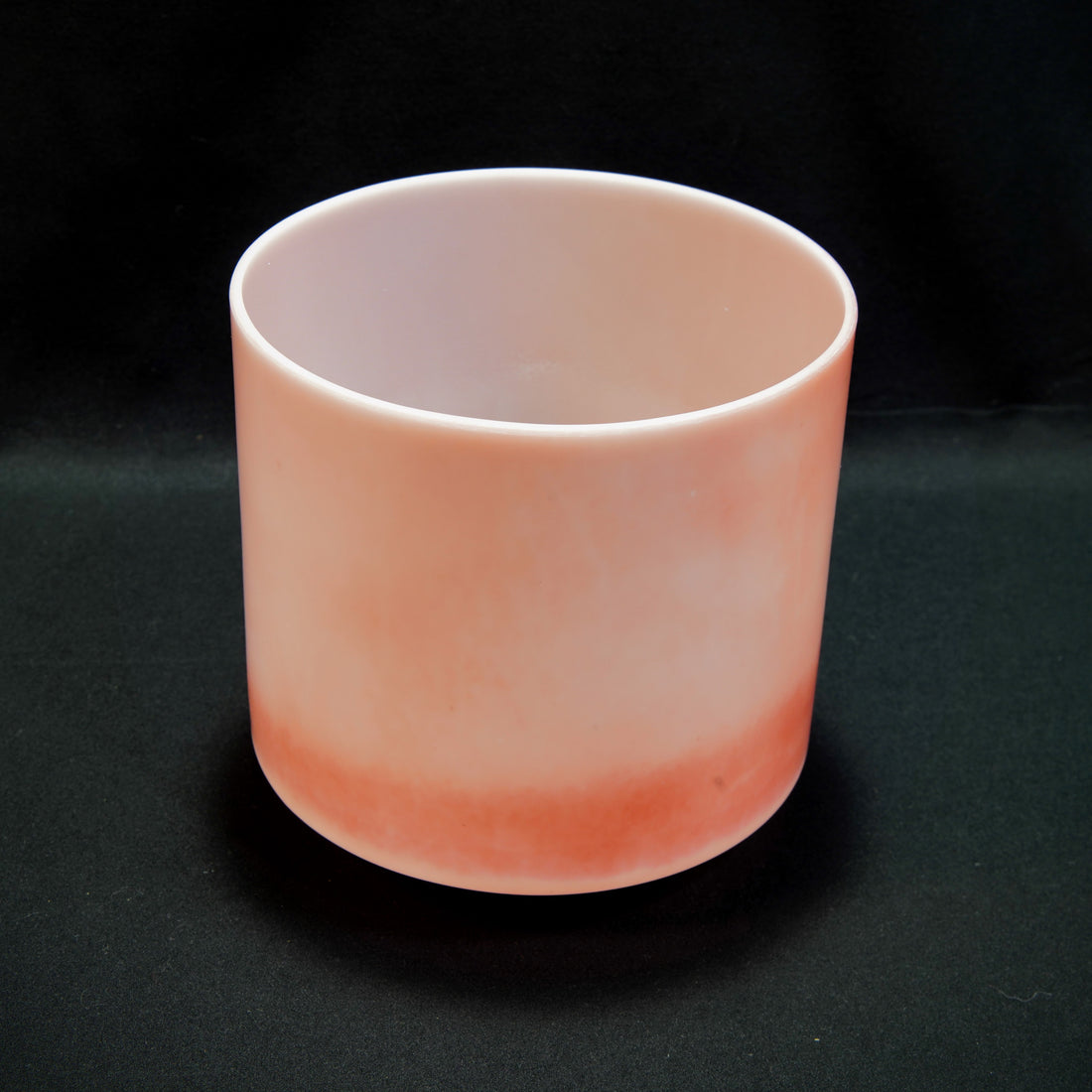
Crystal Singing Bowls vs Tibetan Metal Bowls: Differences and How to Choose
Neither crystal nor Tibetan singing bowls is the better instrument. They're different instruments — different materials, different sounds, different handling — and which one belongs in your practice depends on what you want it to do. This guide compares crystal singing bowls and Tibetan metal bowls on the things that actually differ: what they're made of, how they sound, how they hold up, and what each costs to own and play.

What Each Bowl Is Made Of
Tibetan bowls are traditionally described as containing seven metals, each linked to a celestial body. It's a well-known story, but it's tradition rather than metallurgy: analyses of antique bowls consistently find bell metal bronze — roughly 80% copper and 20% tin, the same alloy used for bells across Asia for centuries. We cover the evidence in depth in our guide to what singing bowls are made of; the short version is that a good Tibetan bowl is a hand-hammered bronze bell, and that's not a downgrade — bronze is why they sound the way they do. Most authentic bowls are hand-hammered, which gives each one slight irregularities and its own tonal character.
Crystal bowls are a modern instrument, developed in the late 20th century. They're formed from crushed quartz fused at high heat — makers typically describe the quartz as very high purity — and come in frosted (opaque) and clear (glass-like) finishes.
How They Sound
This is the real difference, and it's easier heard than described.
Tibetan bowls produce a layered, complex sound. Like gongs, they generate partials that don't sit at neat mathematical intervals, which is where the characteristic shimmer and warble comes from. The result is warm, textured, and grounding — often felt in the body as much as heard. Sustain is shorter than a crystal bowl's.
Crystal bowls produce a cleaner tone dominated by the fundamental, with a long sustain that can fill a room. Within the crystal family there's real variety:
- Frosted bowls have thicker walls and a matte exterior, with a full, loud fundamental — the workhorse of many sound bath setups.
- Clear bowls are thinner and lighter, with a more delicate, transparent tone.
- Alchemy bowls — Crystal Tones' line — are quartz bowls with named finishes (Larimar, Ocean Gold, and roughly a hundred others), each one-of-a-kind in appearance. Every bowl is an individual instrument, which is why we record each one: the recording, not the name, tells you how it sounds.
One distinction worth knowing: most frosted and generic clear bowls produce a simpler, fundamental-dominated tone, while Crystal Tones bowls tend to produce a richer harmonic blend of overtones. It's a different character from a Tibetan bowl's textured shimmer — clear and consonant rather than warbling — and it's the main reason practitioners who've played both often keep both.
In both families, size drives pitch: larger bowls play lower, smaller bowls higher.

Handling, Durability, and Learning Curve
Tibetan bowls are tough. They travel well, tolerate outdoor use, shrug off the occasional hard strike, and need essentially no maintenance. That resilience is a genuine argument for making one your first bowl.
Crystal bowls are fragile. They can crack if struck too hard, and they want padded cases, rubber O-rings for stable placement, and distance from hard floors, children, and pets. Handled with care, a crystal bowl lasts a lifetime — but the care is not optional.
The learning curve runs the same direction: a Tibetan bowl is forgiving from the first session, while a crystal bowl rewards a lighter, more deliberate touch. Our beginner's guide to using a singing bowl covers technique for both.
Comparison Table
Feature |
Crystal Singing Bowls |
Tibetan Metal Bowls |
Material |
Fused quartz (frosted, clear, or alchemy finishes) |
Bell metal bronze, hand-hammered; seven metals in tradition |
Origin |
Modern (late 20th century) |
Long-established bronze bowl craft; see history below |
Sound character |
Clean, fundamental-dominated tone; Crystal Tones bowls add a consonant blend of overtones |
Layered, textured, warbling partials; warm and grounding |
Sustain |
Long; fills a room |
Shorter; felt as much as heard |
Durability |
Fragile; careful handling required |
Very durable; travels well |
Learning curve |
Rewards a light, practiced touch |
Forgiving from day one |
Price |
Generally higher |
Wide range, often more affordable |
Maintenance |
Padded storage, O-rings, suitable mallets |
Minimal |
A Brief, Honest History
Tibetan bowls carry a lot of origin stories, and it's worth being straightforward: bronze bowls have a long, documented history as objects across the Himalayas and surrounding regions, but much of the "ancient sound healing instrument" framing is a 20th-century development, and scholars genuinely disagree about how these bowls were used historically. Crystal bowls have no such ambiguity — they're a late-20th-century invention that grew up alongside modern sound practice. If the history interests you, our singing bowl origin guide digs into what's documented and what's legend.
Where We Stand
Full disclosure: Raven Sounds is a Crystal Tones dealer. We sell crystal singing bowls, gongs, and chimes — we don't sell Tibetan metal bowls. So we have a side, and you should read this comparison knowing that. We've tried to keep it honest anyway, because Tibetan bowls are excellent instruments and pretending otherwise would insult the practitioners we sell to.
What we bring to the crystal side: every bowl in our Crystal Tones collection is hand-selected at the Crystal Tones warehouse, each is one of a kind — named alchemy, individual appearance, its own note — and each is individually recorded, so you hear the exact instrument before it ships. Selection changes as bowls find homes and new ones arrive from buying trips. If you're weighing notes and sizes, our frequency guide is the place to start.
Which Should You Choose?
If you want a durable, forgiving instrument for daily meditation and travel, start with a Tibetan bowl. If you want long sustain, a clean tone, and a bowl chosen for its individual voice, choose crystal — and use the recordings to choose with your ears. Many practitioners end up with both, using crystal bowls for sustained, room-filling passages and Tibetan bowls for texture and grounding. If you're leaning crystal, our selection guide walks through the decision step by step.
FAQs
Which bowl is better for beginners?
Most beginners find Tibetan bowls easier to start with — they're durable and forgiving of technique. Crystal bowls are entirely learnable as a first instrument too; they just ask for more care in handling and a lighter touch.
Can I use Tibetan and crystal bowls in the same session?
Yes, and many practitioners do. The contrast works: crystal bowls carry long, sustained tones while Tibetan bowls add texture and depth. Played together they cover more sonic ground than either alone.
How do I know if a Tibetan bowl is handmade?
Handmade bowls show their making — hammer marks, slight asymmetries, small tonal quirks between seemingly identical bowls. Machine-made bowls look uniform and polished. Whatever you're buying, choose sellers who disclose where and how their instruments are made.